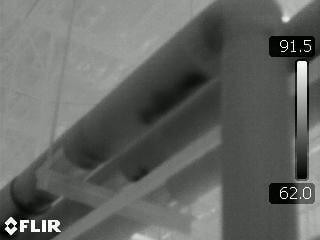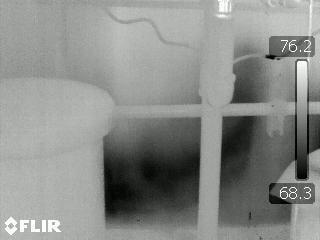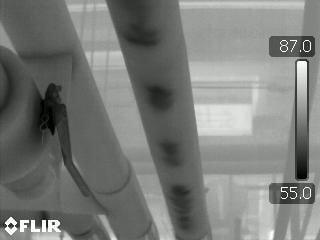
Infrared Thermography Investigations
According to energy.gov, "thermography measures surface temperatures by using infrared video and still cameras."
How do infrared cameras work?
While traditional visible-light cameras capture images of objects radiating light visible to the naked eye, an infrared camera captures what the human eye cannot see.
Thermal cameras don’t work like visible-light cameras. Visible-light cameras use visible light as explained here. Regular daylight cameras and the human eye both work on the same basic principle: visible light energy hits something, bounces off it, a detector receives the reflected light, and then turns it into an image.
Thermal imagers make pictures from heat, not visible light. Heat (also called infrared or thermal energy) and light are both parts of the electromagnetic spectrum, but a camera that can detect visible light won’t see thermal energy, and vice versa. Thermal cameras capture infrared energy and use the data to create images through digital or analog video outputs.
All objects radiate energy, but some wavelengths within the electromagnetic spectrum are invisible. Detectors in an infrared camera capture a particular range of invisible energy emission and then express each heat value (or wavelength) through a set of corresponding colors. The resulting image is called a thermography.
How can infrared cameras be used?